Why Your Error Tracker Is Too Polite
You don't need another dashboard with a red dot. You need an AI that publicly shames you for pushing broken code on a Friday at 4:55 PM.
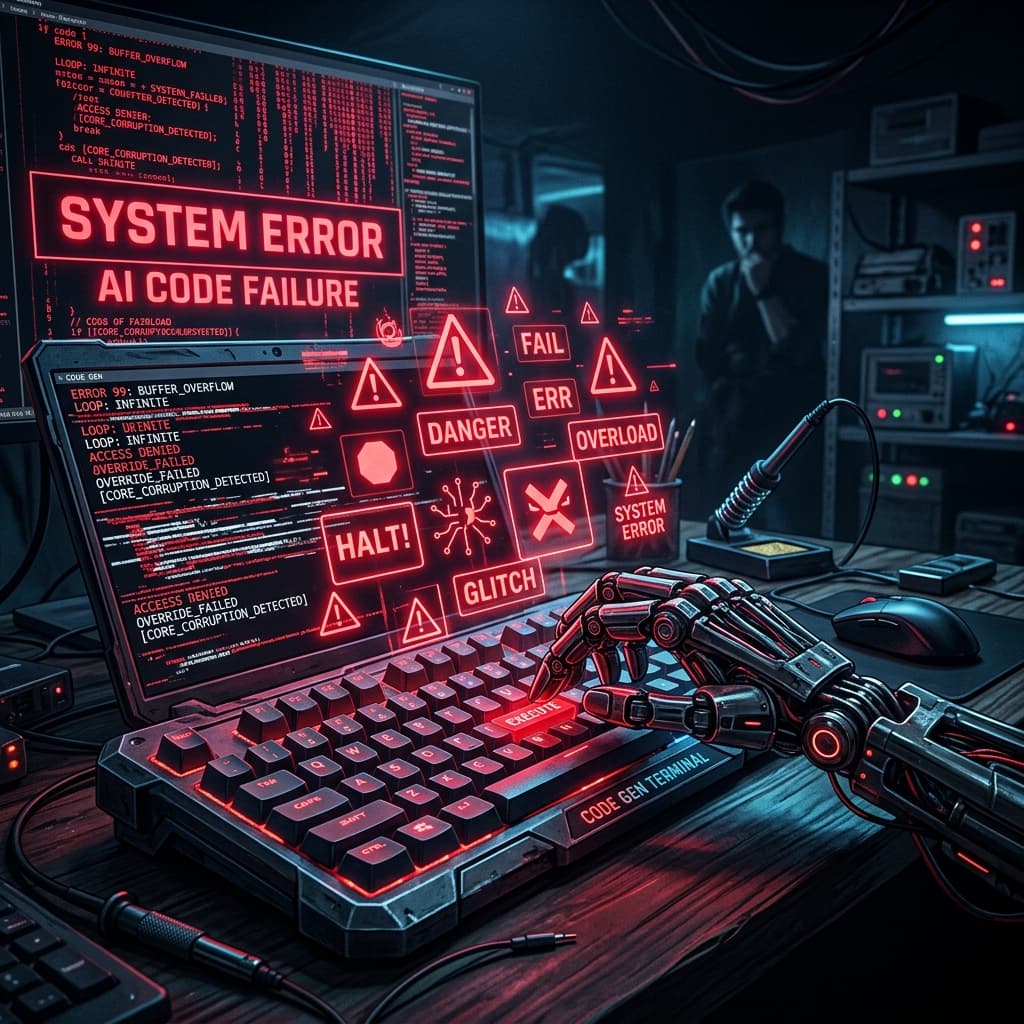
Most error tracking tools treat crashes like sterile, operational metrics. They give you a line number, a stack trace, and quietly file it away in a dashboard you check once a week.
But here's the truth: silent failures breed complacency.
When your backend throws a NullReferenceException for the third time this week because you didn't check if the user actually existed before billing them, a red dot on a dashboard isn't enough. You need accountability. You need a system that makes ignoring errors socially unacceptable.
The Politeness Problem
Traditional tools like Sentry, Bugsnag, and Datadog are excellent at capturing errors. They're terrible at making you care about them.
Here's what happens in practice: 1. An error fires 2. A notification appears in a channel nobody reads 3. Someone marks it as "seen" 4. The error fires again tomorrow 5. Repeat forever
Grumpy breaks this cycle by making the alerts impossible to ignore. When the AI walks your stack trace and delivers a verdict like "You're billing users who don't exist. Again." — in front of your entire Slack channel — you fix it. Fast.
Shame-Driven Development
We didn't invent this concept. Code reviews have used social pressure for decades. Grumpy just automates it. Instead of waiting for a senior engineer to find your mistake in a PR, the AI finds it in production and tells everyone immediately.
The result? Teams using Grumpy see a 40% reduction in mean time to resolution because nobody wants to be roasted twice for the same bug.
Try It
Drop our SDK into your app. Two lines of code. Then push something broken and see what happens.